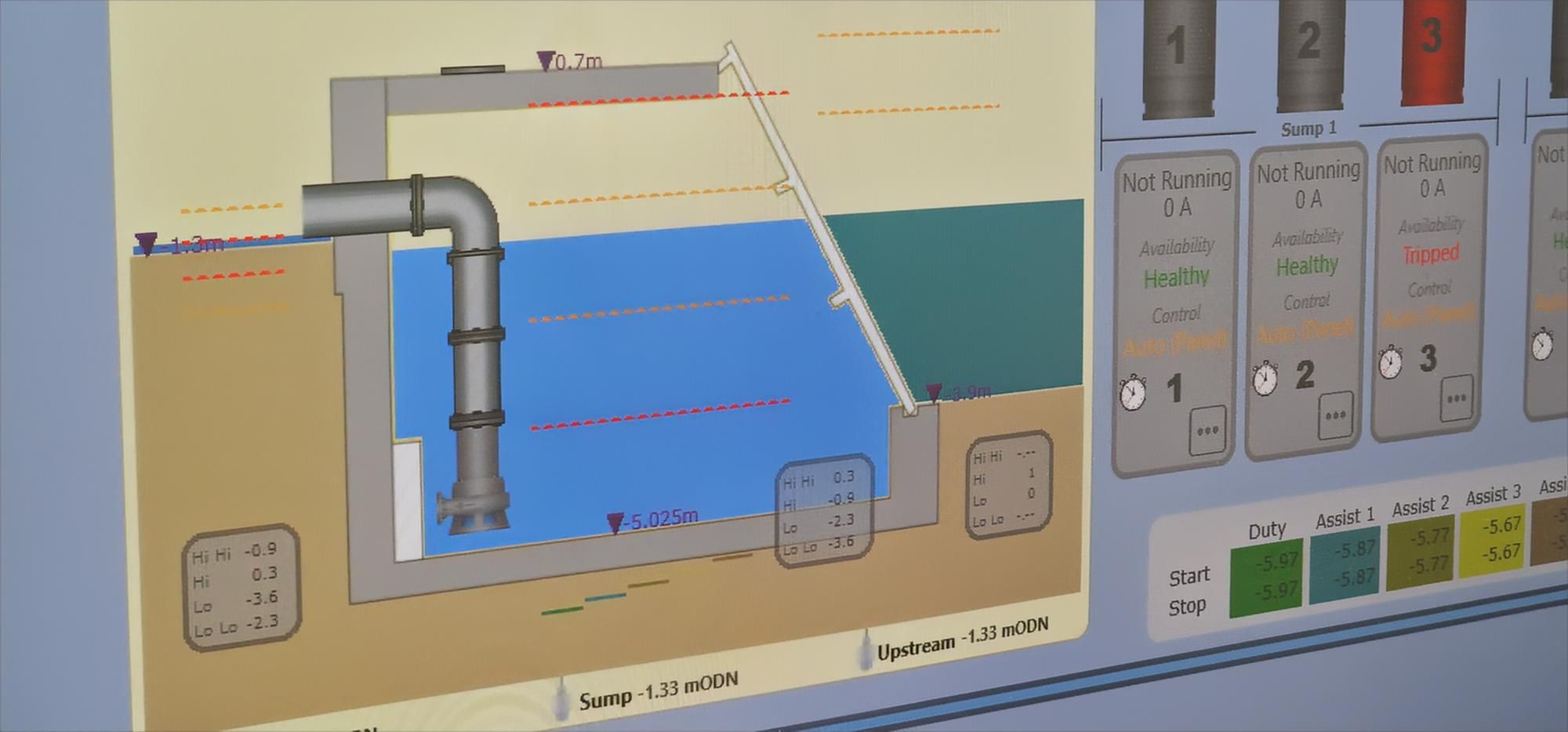
The landscape of water management and land drainage in the United Kingdom is underpinned by critical infrastructure that often remains unseen until a failure occurs. For many Internal Drainage Boards (IDBs), the reliability of this infrastructure was significantly compromised in September 2019 when Control Star Systems Ltd. entered voluntary liquidation. This event left a substantial number of boards including the Witham Fourth District IDB and several Shires Group boards with obsolete, unsupported telemetry systems.
The cessation of Control Star’s operations presented a two-fold risk: the immediate lack of technical support for proprietary hardware and the long-term degradation of flood defence capabilities. LEE-DICKENS Ltd. had already been delivering telemetry solutions for many years across a broad customer base including IDBs and, following the demise of Control Star, was well-positioned to step in and assist Boards who were struggling with unsupported legacy systems. This process prioritises the preservation of existing site investments while introducing the advanced capabilities of Sitewatch Anywhere.
The Technical Burden of Legacy Systems
Control Star systems were widely adopted across the IDB sector for over two decades and were also installed at council and municipal stormwater pumping stations. However, the proprietary nature of their communication protocols and hardware architecture has become a liability. Following the company’s closure, spare parts have become increasingly scarce, and the lack of software updates has left these systems vulnerable to modern cybersecurity threats and incompatible with evolving telecommunications standards. A further critical vulnerability for many boards is their reliance on legacy central servers, which are no longer supportable and represent a significant point of failure.
The primary technical challenge for many operators is the “black box” nature of legacy pump control logic. Many organisations were hesitant to upgrade, fearing that the complex operational parameters: developed over years to suit specific catchment characteristics and local operating practice: would be lost during a hardware swap.

Modern automated sluice gate installation, representative of the wider class of remotely monitored and controlled water management assets that can be incorporated into the same telemetry architecture.
Our engineering approach at LEE-DICKENS Ltd. addresses this specifically. We do not simply replace hardware; we strip out obsolete electronics, inherit the existing field circuits for seamless signal transition, interpret the established control philosophy, and replicate it within our Midi-10 Remote Terminal Units (RTUs) using modern industry-standard systems. In practical terms, the standard automated control routines and interface conventions from Control Star have already been replicated within the migration framework, so the core work is established and there is no need to reinvent the wheel for each new migration. The operational logic is executed locally within the RTU itself, while settings, parameters, and authorised options can be adjusted remotely via the top end. This ensures that the same control philosophy is maintained both at the top-end interface and in the field, preserving the operational integrity of the site while upgrading the underlying technology.
This methodology is equally applicable to:
- existing Control Star installations and
- older pumping stations that never had telemetry at all.
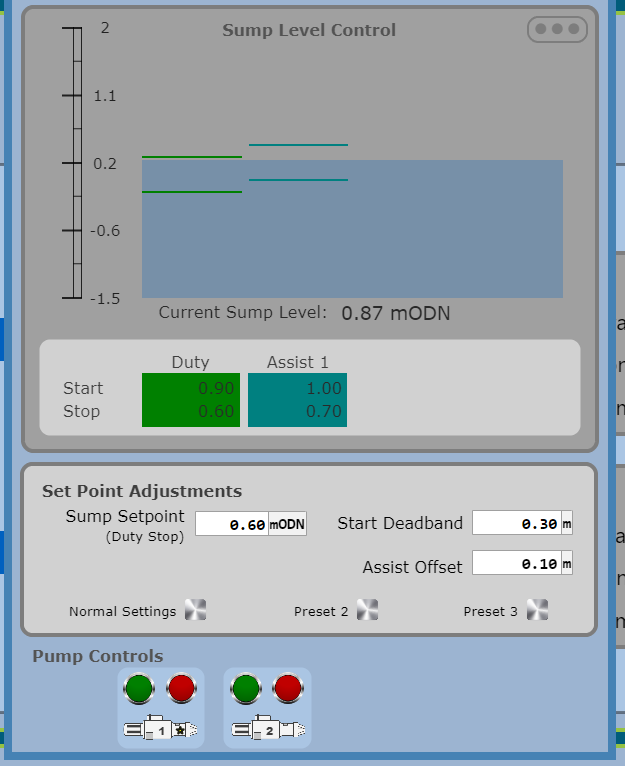
In both cases, the objective is to preserve proven site behaviour where required while extending visibility, alarm handling, and remote operational control through Sitewatch Anywhere. For legacy users, the transition can be made more straightforward by emulating the original cross-sectional views and schematics from Control Star systems, providing immediate familiarity at the operator interface.
Trial Success and Product Rollout: Witham Fourth District IDB
The Witham Fourth District IDB serves as a benchmark for successful telemetry modernisation. Managing a complex network of 7 pumping stations and 12 remote monitoring sites, the Board required a robust solution that could be implemented without operational downtime. The project is now completed and fully operational on the Witham Fourth system, where it has been live and operating successfully for approximately four years.
The migration strategy focused on the deployment of the Midi-10 RTU across the pumping stations. This hardware was selected for its high reliability in demanding industrial environments and its ability to interface with a wide variety of existing sensors and actuators.

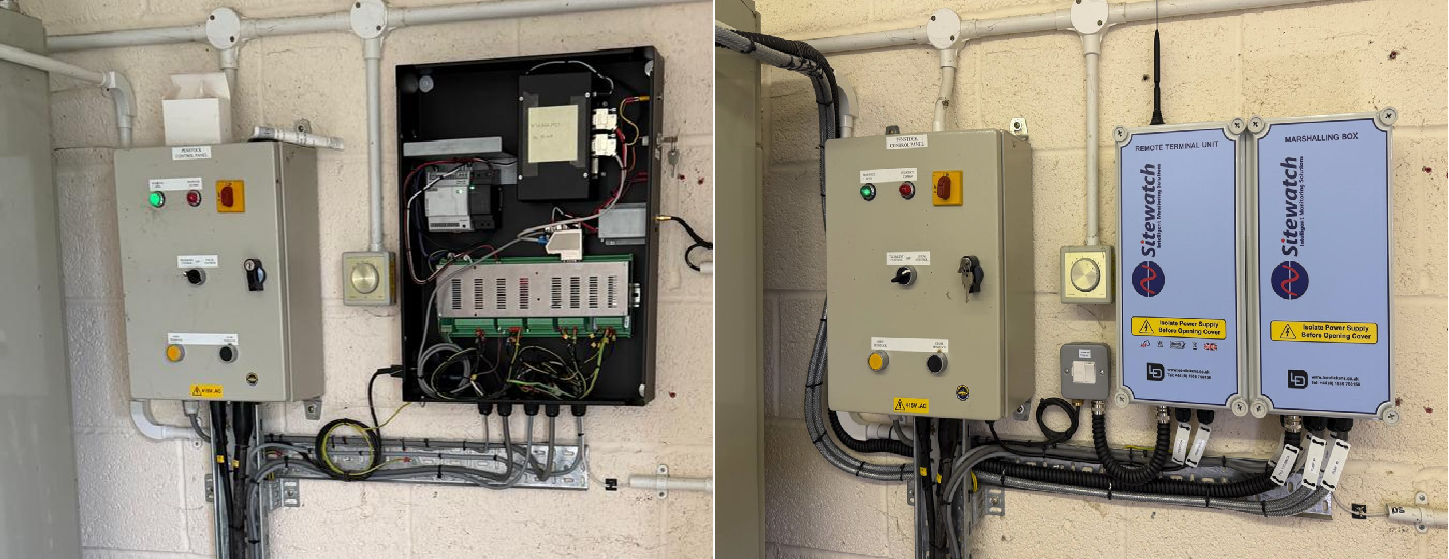
High-integrity Sitewatch Remote Terminal Unit installation panel, showing the robust cabinet layout, wiring discipline, and labelled terminations required for IDB telemetry applications.
During the initial phase, the existing Control Star logic was meticulously mapped and ported to the LEE-DICKENS environment. This allowed the Midi-10 to take over station control with zero disruption to the established pumping regimes. The automated control routines included practical operational features such as remote set point adjustment and preferred pumping times, allowing pumping to be scheduled more intelligently around electricity tariff periods and environmental considerations such as eel migration.
The 12 remote sites were not part of the original Control Star infrastructure; these were new additions utilising solar-powered Mini RTUs for wide-area water level monitoring and rainfall totalisation, as discussed in our related article, Monitoring the ‘Unreachable’: How the Mini RTU Solves the Off-Grid Puzzle, and were integrated into the new telemetry backbone to provide a unified view of the entire district. Rainfall monitoring and totalisation can be accommodated at both Mini RTU sites and full pumping station installations.

Remote watercourse monitoring installation illustrating a typical Mini RTU / rainfall monitoring deployment in the field.
Scaling the Solution: Shires Group and Grimsby
Following the success at Witham Fourth, the migration model has been applied across the Shires group. The rollout at Scunthorpe and Gainsborough Water Management Board is complete, the Ancholme deployment is midway through delivery, and Selby is planned for later this year. In these regions, the geographical spread of assets necessitated a telemetry solution with superior connectivity options. Across these sites, smaller legacy RTUs were replaced with our Mini RTUs and, in many cases, supplementary Pan-Tilt-Zoom (PTZ) CCTV was added to provide visual confirmation of site conditions.

Solar-powered Sitewatch CCTV monitoring pole featuring anti-vandalism security signage and PTZ camera for remote site surveillance.
At North Lincolnshire Council in Grimsby, LEE-DICKENS Ltd. superseded 8 legacy Control Star stations, replacing obsolete equipment with a modern installed system that further demonstrates the scalability of the Midi-10 architecture. These sites are stormwater pumping stations, which require a different response profile compared to typical IDB flood monitoring regimes.
More generally, the focus in these environments was not only on replacing obsolete units but on future-proofing the investment and extending telemetry to sites where earlier generations of control equipment provided limited remote visibility.
Technical Advantages of the Midi-10 and Sitewatch Anywhere
The transition from Control Star to LEE-DICKENS provides immediate technical enhancements that were previously unavailable to IDB operators.
Open Standards and Protocol Interoperability
One of the principal limitations of many legacy telemetry systems is their dependence on proprietary protocols. That discussion is not unique to any single project; it is a general constraint across ageing installations. LEE-DICKENS uses industry-standard communication frameworks, including Modbus TCP/IP and DNP3 where appropriate, to reduce integration risk and avoid vendor lock-in. This allows boards and councils to retain wider choice over peripheral instrumentation, communications infrastructure, and future expansion.
4G LTE Communications and Network Resilience
Legacy systems often relied on fixed-frequency radio or static 2G/3G links, which are increasingly prone to congestion and decommissioning. The Midi-10 Remote Terminal Unit (RTU) is available with 4G LTE Cat-4 communications, support for open SIMs, diversity antenna arrangements, and GNSS-ready capability for applications requiring timing or location reference. This architecture allows the RTU to connect to resilient modern mobile networks without tying the customer to a closed communications model.
Where site risk justifies it, redundant communications can also be provided using broadband as the primary bearer with 4G fallback, or vice versa, thereby improving continuity during carrier outages or local infrastructure failures.
Fallback Mode and Local Intelligence
A primary concern for any telemetry engineer is “loss of comms.” Our systems feature an intelligent Fallback Mode. In the event of a total communication failure with the central server, the Midi-10 RTU continues to execute its programmed control logic locally. It maintains the pumping station’s operational status based on local sensor data, ensuring flood protection remains active even when the wide-area network is compromised. In addition, the RTU includes a hardware watchdog arrangement so that, if the RTU is unable to deliver automated controls, operation can automatically fall back to the original primitive legacy panel controls.
Sitewatch Anywhere: The Thin Client Revolution
The migration includes the implementation of the Sitewatch Anywhere platform. Unlike legacy SCADA systems that required dedicated PC terminals and complex software installations, Sitewatch Anywhere is a pure HTML5 browser-based solution.
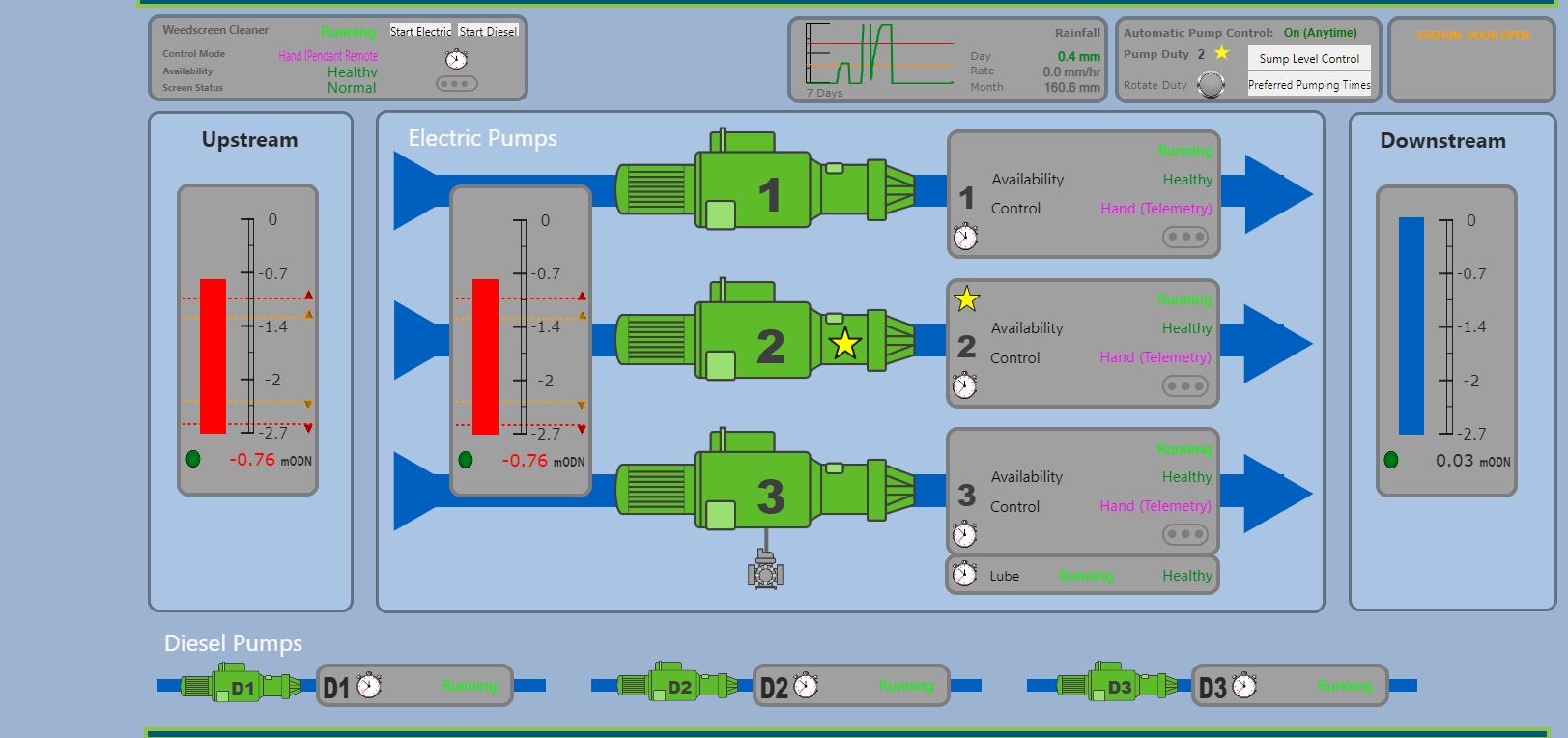
SCADA dashboard view for a 3-pump station, showing live station status, process values, and control information accessible through the Sitewatch Anywhere browser interface.
The benefits of this thin-client technology include:
- Universal Access: Managers and engineers can monitor site status from any device: laptop, tablet, or smartphone: without installing proprietary applications.
- Zero Footprint: All software maintenance and updates are handled server-side, removing the need for local IT support at every terminal.
- Mobile Field Access: Field engineers at a remote site can view live data trends and override controls directly from their mobile devices, improving response times during maintenance or emergency call-outs.
Enhanced Efficiency through Integrated Workflows
Modernising the telemetry system allows for the integration of data streams that were previously separated. By incorporating live rainfall data and tide levels into the SCADA dashboard, IDBs can move from a reactive to a proactive operational stance. Rainfall monitoring and totalisation can be handled at both remote Mini RTU sites and pumping station sites, giving operators a more complete hydrological picture across the catchment.
For instance, if high intensity rainfall is detected in the upper reaches of a catchment, the Sitewatch system can trigger automated alerts or support pre-emptive pumping sequences based on predicted inflow, rather than waiting for local level sensors to reach a high-alarm threshold. The same framework also supports practical control refinements such as remote set point adjustment and preferred pumping times, allowing station operation to be aligned with tariff-sensitive electricity periods or ecological considerations.
Looking ahead, the same data architecture can support a further step into proactive controls, where water levels are dynamically moderated against real-time models and forecast conditions. This is not presented as a disruptive change to established operating practice, but as a logical next-stage capability that can be adopted when customers are ready.
Furthermore, the system supports automated maintenance workflows. By tracking pump run-hours and electrical signatures (such as power factor and current draw), the system can predict mechanical wear. This allows for scheduled maintenance based on actual usage data, rather than arbitrary time intervals, leading to significant long-term cost savings.
Strategic Migration: The LEE-DICKENS Commitment
The obsolescence of the Control Star system does not have to result in a fragmented or high-risk replacement project. Our experience with IDBs across the UK has refined a migration methodology that is both technically rigorous and operationally sympathetic.
We understand that for an Internal Drainage Board, the telemetry system is not just a data logger; it is the central nervous system of their flood defence strategy. By choosing to migrate to LEE-DICKENS, boards gain access to over 60 years of engineering expertise in high-integrity industrial and military process monitoring. Sitewatch Anywhere is delivered as a subscription-based service, providing a cost-effective operating model without the need for heavy upfront infrastructure costs. Alongside the technology itself, LEE-DICKENS provides a comprehensive maintenance package to ensure the continuous health and performance of the telemetry network.
Customer Support and Long-Term Partnership

LEE-DICKENS places particular emphasis on customer support.
As a smaller engineering company, a more personal level of service can be provided, with direct technical engagement, practical responsiveness, and a willingness to go the extra mile when operational issues arise. Across the IDB sector in particular, customers are not regarded as anonymous account entries but as long-term partners, and very much as part of the wider LEE-DICKENS family. That close working relationship is an important part of how complex telemetry migrations are delivered successfully and then supported over the long term.
It should also be recognised that many of the original Control Star systems were installed to a very high standard.
LEE-DICKENS is committed to maintaining that tradition of excellence, ensuring that all new telemetry and RTU installations are executed to the highest quality standard and are engineered for long-term reliability over several decades of operational service.
Conclusion
The path from an obsolete Control Star system to a modern Sitewatch Anywhere environment is a strategic investment in reliability, efficiency, and future scalability. Through the deployment of Midi-10 RTUs, the replication of established control logic, and the retention of existing field circuits where appropriate, LEE-DICKENS Ltd. provides a seamless transition that mitigates the risks of legacy hardware failure. More broadly, LEE-DICKENS has been delivering telemetry solutions for many years across sites that never used Control Star, and following the demise of Control Star was able to step in and assist operators who were struggling with unsupported systems.
Our solutions for the Witham Fourth District IDB, the Shires group, and the North Lincolnshire Council system in Grimsby demonstrate our ability to handle complex, multi-site migrations with precision.
The same engineering approach can also be applied to older pumping stations that never previously had telemetry, extending remote monitoring and control without requiring a wholesale rebuild of field infrastructure. LEE-DICKENS has, for many years, provided telemetry for customers with no historical connection to Control Star; support for legacy Control Star sites should therefore be understood as an additional service built upon a much longer-standing telemetry capability. We invite Operations Directors and Technical Project Managers currently managing legacy systems to consult with our engineering team.
About LEE-DICKENS Ltd.
Established in 1962, LEE-DICKENS specialises in the design, prototyping, and manufacture of high-integrity industrial and military process monitoring and control systems. Our core offerings include high-performance process instrumentation and the Sitewatch RCMS platform, ensuring live status updates and maximum efficiency for critical infrastructure. For more information on our telemetry services, visit www.lee-dickens.co.uk or our dedicated cloud monitoring site sitewatchanywhere.co.uk.
Contact us today to discuss your migration from legacy Control Star systems and secure your infrastructure for the next generation of water management.
Leave a Reply